
QUICK SUMMARY
An autism-friendly home is not about creating a perfect house. It is about making everyday spaces more predictable, calmer, safer, and easier for an autistic child to use. Simple changes such as reducing sensory overload, creating clear routines, offering quiet spaces, organizing common areas, and respecting your child’s communication style can make home life feel more manageable for the whole family.
Home is where many children recover from the demands of the outside world. For autistic children, home can be especially important because school, childcare, errands, appointments, family events, and public places may involve noise, bright lights, transitions, social expectations, and sensory input that build up throughout the day.
An autism-friendly home does not need to look like a therapy room. It does not need to be expensive, minimalist, or perfectly organized. It should still feel like your family’s home. The goal is not to remove every challenge or control every moment. The goal is to create a home environment that helps your child feel safer, more understood, and better able to participate in daily life.
This guide is not medical advice or a home safety assessment. It is a practical parent guide to thinking about routines, sensory needs, organization, communication, and everyday home supports.
What Makes a Home Autism-Friendly?
An autism-friendly home is a home that takes your child’s needs seriously.
For one child, that may mean a quiet corner where they can recover after school. For another, it may mean visual reminders for morning and bedtime routines. For another, it may mean softer clothing choices, predictable mealtimes, low lighting, fewer loud background sounds, or a clear plan for screen time.
There is no single correct version of an autism-friendly home. The right setup depends on your child’s sensory profile, communication style, routines, age, interests, and support needs.
A helpful home setup often considers:
- Sensory comfort
- Predictable routines
- Clear communication
- Safety
- Organization
- Quiet spaces
- Movement needs
- Transitions
- Privacy and dignity
- Family stress levels
The best changes are usually practical, not dramatic. A small adjustment that reduces daily conflict can matter more than a full home makeover.
Start With Observation
Before changing the home, start by observing where daily life feels hardest.
Look for patterns. Does your child struggle most in the morning? After school? During meals? At bedtime? During screen transitions? When siblings are noisy? When the house is cluttered? When plans change?
You may notice that one room creates more stress than another. The bathroom may be difficult because of echo, lighting, the toilet flush, handwashing, or grooming routines. The kitchen may be hard because of smells, noise, food textures, or mealtime expectations. The bedroom may not feel calming enough for sleep. The living room may be too visually busy or too loud.
Useful questions include:
- Where does my child seem most calm at home?
- Where do meltdowns or shutdowns often happen?
- What sounds, lights, textures, smells, or routines seem difficult?
- What helps my child recover?
- What parts of the day feel rushed or unpredictable?
- What changes would make daily life easier for everyone?
Observation helps you avoid guessing. It also helps you make changes that match your child’s actual needs.
Create a Calm Space
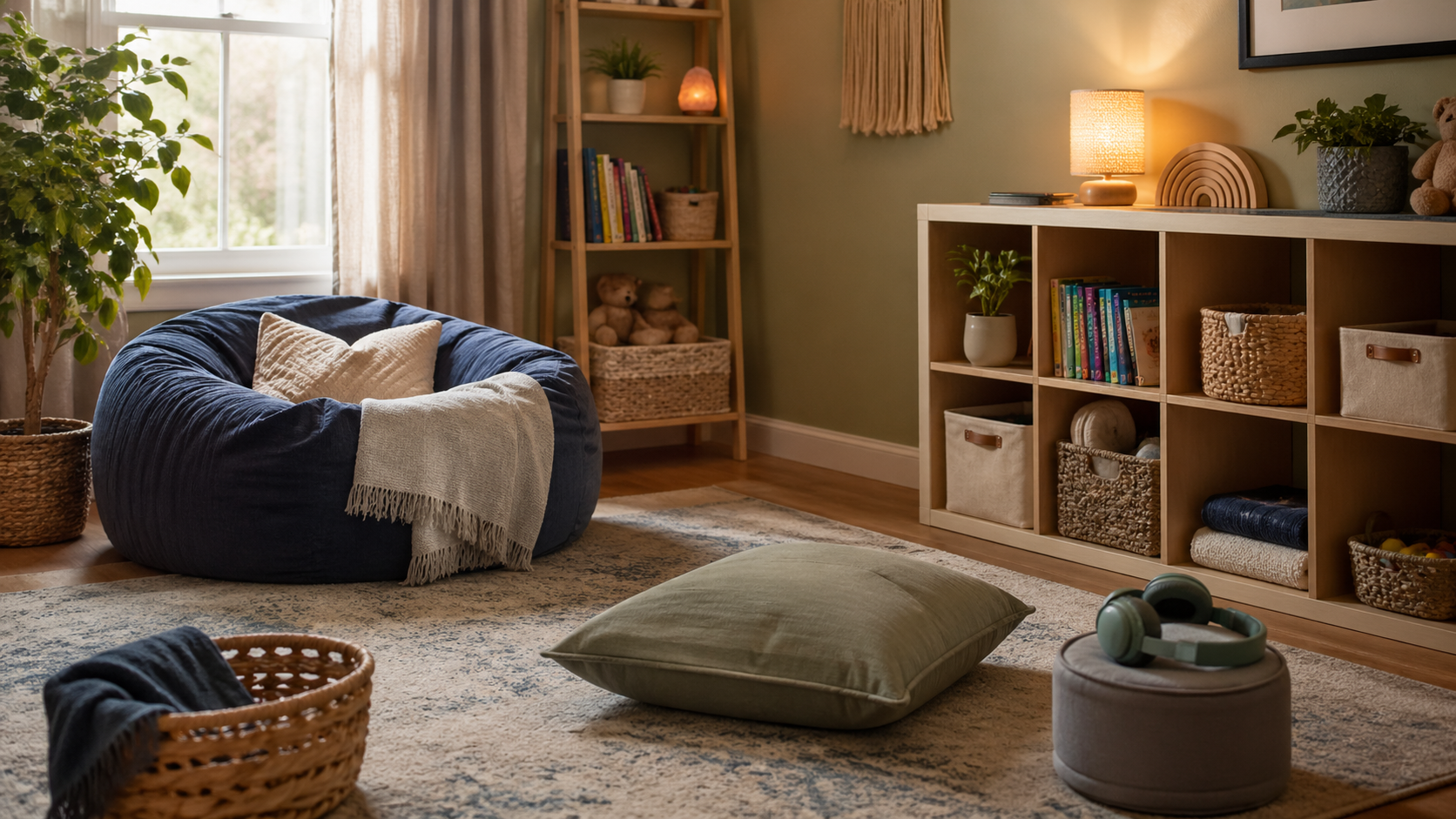
Many autistic children benefit from having a calm space at home. This does not need to be a separate room. It can be a corner, chair, small tent, reading nook, bedroom area, or quiet part of the living room.
The purpose of a calm space is to give the child somewhere to reset when the world feels too loud, busy, or demanding.
A calm space may include:
- Soft lighting
- A blanket or cushion
- A favourite book
- Noise-reducing headphones
- A comfort item
- A few quiet toys
- Soft textures
- A visual calm-down choice board
- Space away from heavy foot traffic
Try not to treat the calm space as punishment. It should not mean “go away because you are being difficult.” It should mean “you have a safe place to recover.”
Parents can introduce it gently:
“This is your quiet space. You can come here when things feel too loud or when you need a break.”
Some children may want a parent nearby. Others may need alone time. The goal is to understand what helps your child feel regulated.
Reduce Sensory Overload Where Possible
A home can feel normal to one person and overwhelming to another. Background noise, bright lighting, strong smells, clutter, scratchy fabrics, loud appliances, or crowded rooms can all affect how an autistic child feels.
You do not need to make the home silent or empty. But reducing unnecessary sensory stress can help.
Sound supports may include:
- Turning off background TV or music when not being used
- Warning your child before using loud appliances
- Offering headphones during vacuuming or noisy activities
- Creating quieter times after school
- Using soft-close bins or doors where possible
- Keeping one area of the home calmer than the rest
Light supports may include:
- Using lamps instead of harsh overhead lights
- Closing blinds during bright times of day
- Avoiding flickering bulbs
- Letting the child choose a comfortable lighting level when possible
- Keeping bedtime lighting soft and predictable
Smell supports may include:
- Using unscented soap or laundry products if scents are difficult
- Avoiding strong air fresheners
- Noticing whether cooking smells affect mealtimes
- Ventilating rooms when needed
Texture supports may include:
- Choosing softer bedding
- Removing clothing tags when needed
- Offering comfortable seating
- Noticing whether rugs, blankets, towels, or furniture textures bother your child
Small sensory changes can make the home feel safer and less exhausting.
Make Routines Visible
Many autistic children feel more comfortable when they can see what is happening next. Visual supports can make routines easier to understand and reduce repeated verbal reminders.
Visual supports can be simple. They do not need to be professionally designed.
They may include:
- Morning routine chart
- Bedtime checklist
- First-then board
- Picture schedule
- Written list
- Calendar
- Timer
- Labels on bins or drawers
- Simple drawings
- “All done” basket for completed tasks
For example, a morning routine might include:
- Get dressed.
- Eat breakfast.
- Brush teeth.
- Put on shoes.
- Pack bag.
- Leave for school.
A bedtime routine might include:
- Pajamas.
- Bathroom.
- Brush teeth.
- Story.
- Lights off.
Visual supports can reduce the need for parents to repeat instructions again and again. They also give the child more independence because the routine is visible.
Support Transitions at Home
Transitions are often hard at home because family life involves many small shifts: waking up, stopping screen time, leaving the house, coming inside, starting dinner, taking a bath, cleaning up, or going to bed.
A child may struggle not because they are refusing to cooperate, but because the transition feels sudden or difficult to process.
Helpful transition supports include:
- Giving warnings before changes
- Using timers
- Offering a first-then statement
- Keeping language short and clear
- Allowing extra time
- Using a visual schedule
- Letting the child bring a transition object
- Reducing unnecessary talking during stressful transitions
- Making the next step clear
For example:
- “Five more minutes, then screen is finished.”
- “First shoes, then car.”
- “After dinner, we clean up one toy bin.”
- “Bath is next. Then pajamas.”
Predictable transitions can reduce conflict and help the child move through the day with less stress.
Organize Spaces for Independence
Organization can support independence. When items have clear places, routines become easier.
This does not mean every closet needs to look perfect. It means the child can understand where things belong and what to do next.
Helpful home organization may include:
- Labeled bins
- Clear storage containers
- A school bag station
- A shoe and coat area
- A visual checklist near the door
- A homework or quiet work area
- A basket for comfort items
- A predictable place for headphones
- A simple drawer for preferred clothing
- A bedtime routine basket
Try to organize around real routines. If mornings are difficult, focus on the entryway, clothing, breakfast, and backpack. If bedtime is difficult, focus on pajamas, bathroom steps, books, lighting, and sleep space. If screen transitions are difficult, create a clear start and stop routine.
Organization is most helpful when it reduces decision-making and stress.
Think About Movement Needs
Some autistic children need movement to feel calm, alert, or organized. A home that supports movement can help reduce frustration and unsafe climbing, crashing, or running.
Movement needs vary. One child may need jumping, spinning, swinging, stretching, pushing, pulling, dancing, walking, or deep pressure. Another may prefer quiet, stillness, or gentle movement.
Safe movement options may include:
- A small indoor movement area
- Cushions for crashing safely
- Animal walks
- Wall push-ups
- Carrying laundry
- Pushing a weighted basket
- Stretching
- Dancing to one song
- Outdoor time when possible
- A movement break before seated activities
The goal is to offer safer ways to meet the need. If a child is constantly jumping on furniture, the question may not be “How do we stop movement completely?” It may be “How can we provide movement in a safer way?”
Make Bedrooms More Restful
Sleep can be affected by sensory needs, routines, anxiety, screens, lighting, noise, and transitions. A restful bedroom may help, though every child is different.
A bedroom may feel more calming when it has:
- Soft lighting
- Comfortable bedding
- Reduced clutter
- Predictable bedtime items
- Fewer stimulating toys near sleep time
- A white noise machine or quiet environment, if helpful
- Comfortable temperature
- Blackout curtains, if light is an issue
- A simple bedtime routine chart
Some children need the room very quiet. Others sleep better with steady background sound. Some need soft blankets. Others dislike heavy bedding. Some need a favourite object nearby.
The best bedroom setup is the one that helps your child settle while still being practical for your family.
Make Mealtimes Less Stressful
Mealtimes can involve sensory, routine, and communication challenges. Food texture, smell, temperature, colour, brand, plate arrangement, noise, seating, hunger cues, and family expectations can all matter.
An autism-friendly home does not mean letting meals become chaotic. It means understanding what makes eating harder and reducing unnecessary pressure.
Helpful mealtime supports may include:
- Predictable meal routines
- A consistent seat
- Reduced background noise
- Familiar foods alongside new foods
- Respecting texture sensitivities
- Clear expectations
- Smaller portions
- Calm language
- Avoiding battles over every bite
- Not using shame around food preferences
If eating concerns are significant, parents should seek appropriate guidance. But for everyday support, reducing pressure and understanding sensory patterns can make meals calmer.
Create a Screen Time Routine
Screens can be enjoyable, calming, educational, or deeply engaging for many children. They can also be hard to stop, especially when transitions are difficult.
A screen time routine can help make expectations clearer.
Parents may use:
- A visual timer
- A clear start and stop time
- A first-then statement
- A predictable screen location
- A transition activity after screens
- A warning before stopping
- A limited menu of choices
- A calm script for ending screen time
For example:
- “First tablet, then snack.”
- “You have ten minutes left. When the timer rings, tablet goes on the shelf.”
- “After the show, we are doing pajamas.”
The goal is not to make screen time a constant battle. The goal is to create boundaries that are easier to understand.
Prepare for After-School Recovery
Many autistic children use a lot of energy at school. They may hold it together all day and then fall apart at home. This does not mean home is the problem. It may mean home is where the child finally feels safe enough to release stress.
An autism-friendly home can include an after-school recovery routine.
This might include:
- A quiet greeting
- Snack and water
- Reduced questions right away
- Time alone or near a parent
- A calming activity
- Movement
- Headphones
- Soft lighting
- No immediate demands
- A predictable transition into homework or evening routines
Instead of asking many questions as soon as your child walks in, it may help to wait. Some children need time before they can talk about their day.
A simple routine like “home, snack, quiet time” can make afternoons easier.
Support Siblings and Shared Spaces
A home is for the whole family. Siblings may also need space, attention, privacy, and support. An autism-friendly home should not mean every family member’s needs disappear.
Shared spaces can work better when expectations are clear.
Families may need:
- Quiet zones
- Loud-play zones
- Clear rules for shared toys
- Separate storage for special items
- Visual reminders
- Break options
- Parent attention for siblings
- Simple explanations about sensory needs
- Family routines that are fair and realistic
Siblings can learn compassion without being expected to manage everything. They should not feel responsible for preventing every meltdown or changing their whole life without support.
A balanced home considers everyone while still recognizing that the autistic child may need specific supports.
Respect Privacy and Dignity
As children grow, privacy and dignity matter even more. Home supports should not make the child feel like a problem or project.
Avoid talking about your child’s difficulties as if they are not in the room. Avoid using shame around bathroom routines, meltdowns, food preferences, clothing sensitivities, or communication differences. Avoid making supports feel babyish when the child is older.
Use respectful language:
- “Your headphones help with noise.”
- “Your quiet space is there when you need a break.”
- “Your visual schedule helps you know what is next.”
- “We are learning what works for you.”
The way adults talk about supports shapes how children feel about themselves.
Keep Changes Simple
Parents may feel pressure to redesign the whole house. That is usually not necessary.
Start with one problem area.
If mornings are hardest, adjust the morning routine. If bedtime is hardest, focus there. If after-school meltdowns are common, build a recovery routine. If public outings are exhausting, prepare a home reset plan. If screen time causes conflict, create a clearer transition system.
Small changes are easier to maintain.
A useful approach is:
- Choose one routine.
- Observe what is difficult.
- Make one small change.
- Watch what happens.
- Adjust if needed.
This keeps the process manageable.
When Extra Support May Be Needed
Some home challenges may need more support than a general article can provide. If parents are dealing with major safety concerns, severe sleep disruption, eating concerns, frequent intense distress, hygiene challenges, self-injury, aggression, elopement, or sudden major changes in behaviour, it may be important to seek appropriate professional guidance.
Asking for help does not mean you have failed. It means your family may need more specific support.
This article is meant to offer everyday home ideas, not replace individualized advice.
Final Thoughts
An autism-friendly home is not about perfection. It is about understanding.
When parents notice sensory needs, make routines more predictable, create calm spaces, support transitions, organize key areas, and respect communication differences, home can become easier for the whole family.
You do not need to change everything at once. Start with the part of the day that causes the most stress. Make one small adjustment. Build from there.
The best autism-friendly home is not the most expensive or carefully designed one. It is the home where your child feels understood, your family has practical systems that work, and daily life becomes a little more manageable.