
Two children playing calmly with blocks and a puzzle during a supervised playdate at home.

Autism and Playdates: Helping Your Child Feel Comfortable

Autism playdates work best when they are calm, flexible, and planned around the child’s comfort. This guide helps parents choose the right setting, set clear expectations, support shared play, and reduce pressure so social time feels more manageable.

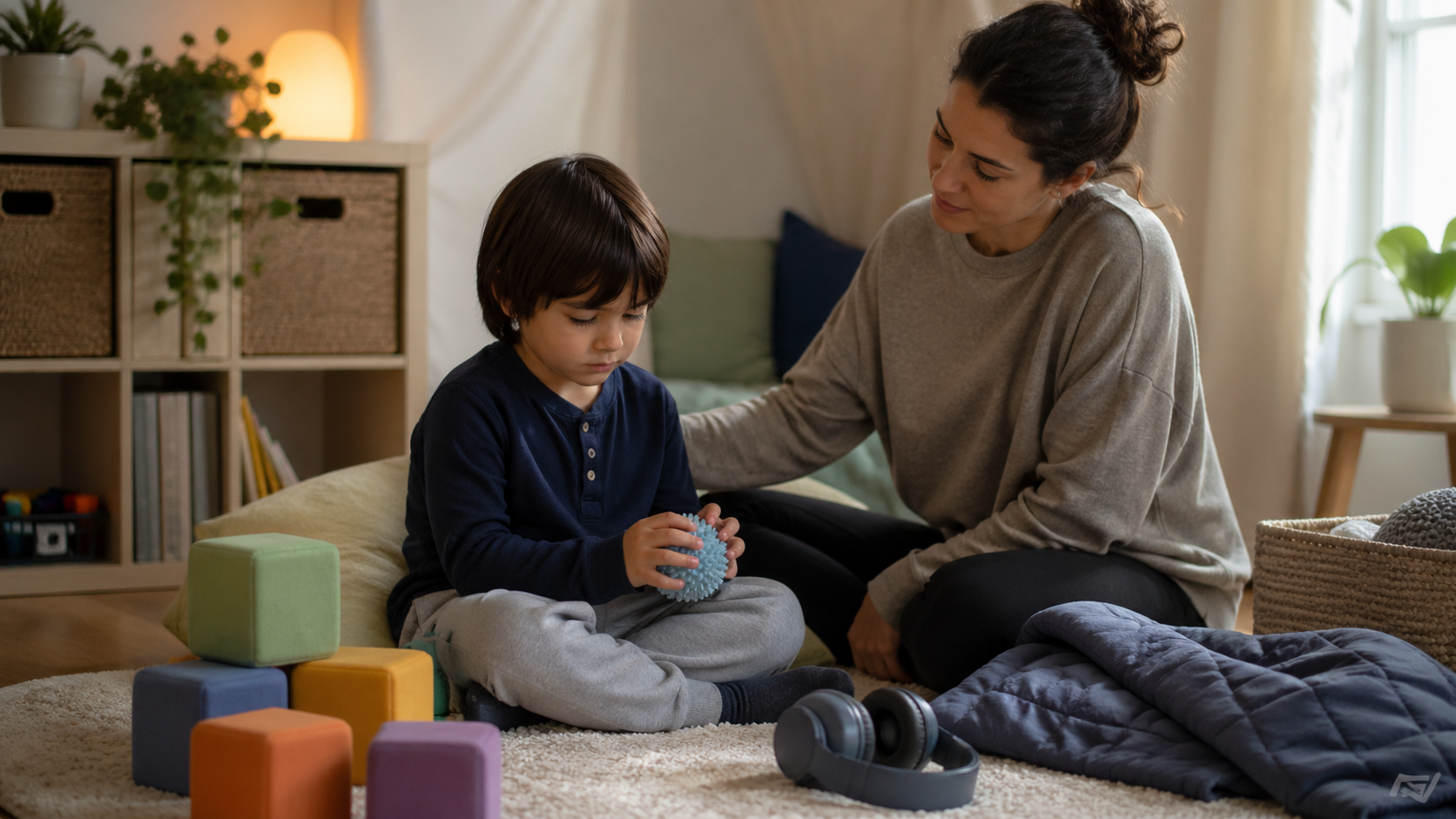
Parent supporting a young child in a calm sensory-friendly corner at home.

Understanding Sensory Processing Challenges: Autism Parent Guide

Sensory processing challenges can affect how an autistic child responds to sounds, lights, textures, movement, smells, and busy environments. This guide helps parents understand common sensory needs and think about supportive ways to make daily routines feel calmer and more manageable.


Adult sitting calmly by a window with a notebook and cup of tea, reflecting in a quiet home workspace.

Autism in Adults: What It Can Look Like and Why It Matters

Autism in adults can look different from person to person, and many adults are not recognized until later in life. This guide explains common experiences, possible reasons for late recognition, and why understanding autism in adulthood can help with self-awareness, support, and acceptance.

Parent and teacher having a supportive school meeting at a table with a notebook, folder, and classroom materials nearby.

Understanding IEPs: Autism Parent Guide

An Individual Education Plan (IEP) helps outline the school supports, accommodations, and goals a student may need. This guide explains what parents should know about Individual Education Plans, what questions to ask, and how to stay organized when working with the school team.